How To Install Gparted On Red Hat Linux 9
Parted is a famous command line tool that allows you to easily manage hard disk partitions. It can help you add, delete, shrink and extend disk partitions along with the file systems located on them. Parted has gone a long way from when it first came out. Some of it’s functions have been removed, others have been added.
- How To Install Gparted On Red Hat Linux 9 1
- How To Install Gparted On Ubuntu
- How To Install Gparted On Red Hat Linux 9 0
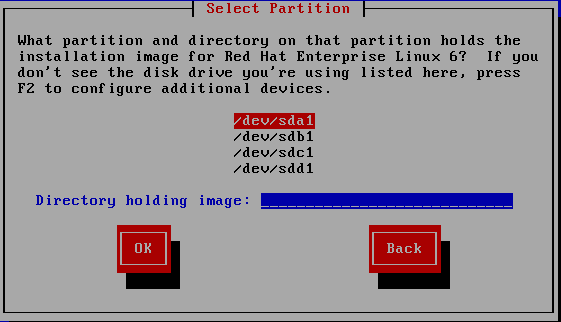
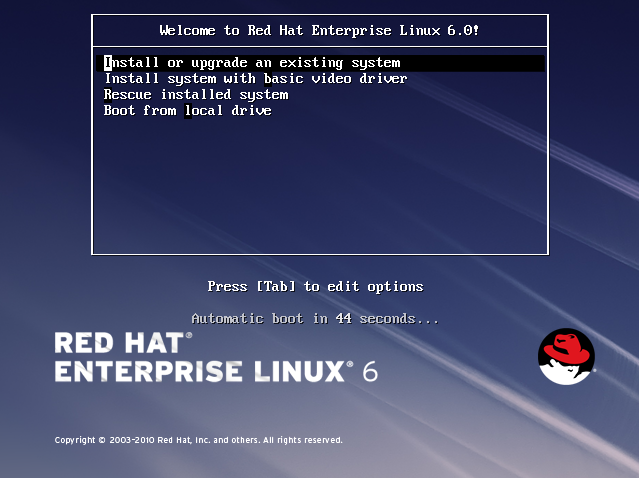
OS Installation Guide: Red Hat Linux 9.0 9 Installing Red Hat Linux 9.0 To prepare your server for provisioning and managing of devices on a SkyPilot wireless network, you must perform a custom installation (or reinstallation) of the Red Hat Linux 9.0 operating system that will, among other things, exclude software. Installing RHEL 6.9 Server. As your computer reboots, you will need to press the appropriate key to access your system's BIOS settings. On many systems this key will be 'F8', 'F11' or 'F12'. Most systems will display the a message indicating which key needs to be pressed. Once you have access to your BIOS settings. Download and Install Red Hat Linux on Windows 7 - Guide, redhat support,install redhat from usb,redhat download,redhat enterprise linux, install redhat on Windows, windows 7 with linux, Red Hat Enterprise Linux will happily co-exist with almost any version of Windows up to and including Windows 8.1. Unix & Linux Stack Exchange is a question and answer site for users of Linux, FreeBSD and other Un*x-like operating systems. How to install parted 3.2? Browse other questions tagged centos gparted parted or ask your own question. 1 year, 9 months. Select Install Red Hat Enterprise Linux 7.2 to install RHEL. Installing Red Hat Red Hat installation on x86 from main menu. The main menu for installing Red Hat appears very similar to the POWER8 processor-based Anaconda menu we saw previously. You will need to select and configure each part of the OS just as you did previously. Installing GParted under RHEL 5 (Page 1) — GParted — GParted forum — Support forum for users of GParted and the GParted Live media. With yum you need to install: [root@ws157 Desktop]# yum install cairo-devel glib2-devel gtk2-devel pango-devel perl-XML-Parser libstdc++.i386 gcc-c++.i386.
In this tutorial you will learn the basics of parted and we will show you some practical examples. If you don’t have any previous experience with parted, please be aware that parted writes the changes immediately to your disk, so be careful if you try to modify your disk partitions.
If you plan on testing parted, the better option would be to simply use a virtual machine or old computer/laptop without any valuable information on it. To make modifications on a disk partition it must not be in use. If you need to work on primary partition, you may boot into rescue mode.
Note: You will need to have root access to the machine you will be working on in order to use parted.
How to Install Parted on Linux
On many Linux distributions, parted comes pre-installed. If it is not included in your distro, you can install it with:
Once you have make sure that parted is installed, you can proceed further to check out some real world examples of parted command in the rest of this article.
1. Check Parted Version
Run the following command, you see message similar to the one shown on the image below. Don’t worry if your parted version is different. Unless specified otherwise, parted will use your primary drive, which in most cases will be /dev/sda.
Check Parted Command Version
If you want to exit parted, simply type:
2. List Linux Disk Partitions
Now that parted is started, let’s list the partitions of the selected hard disk. As mentioned earlier, parted chooses your first drive by default. To see the disk partitions run print.
When running print, it will also display the hard disk information and model. Here is example from a real hard disk (not virtual as shown on the image above) :
In the example above, you can see the disk model, capacity sector size and partition table.
3. List or Switch to Different Disk
If you have more than one hard disk, you can easily switch between disks, by using the “select” command. In the example below, I will switch from /dev/sda to /dev/sdb which is a secondary drive on my system.
To easily switch between disks you can use:
 Also can you give me a general idea of what this might cost me.
Select Different Disk
Change 'X' with the letter of the disk to which you wish to switch.
4. Create Primary or Logical Partition in Linux
Parted can be used to create primary and logical disk partitions. In this example, I will show you how to create primary partition, but the steps are the same for logical partitions.
To create new partition, parted uses “mkpart“. You can give it additional parameters like 'primary' or 'logical' depending on the partition type that you wish to create.
Before you start creating partitions, it’s important to make sure that you are using (you have selected) the right disk.
Start by using print:
As shown on the above image, we are using a virtual drive of 34 GB. First we will give the new disk a label and then create a partition and set a file system on it.
Now the first step is to give the new disk a label name with:
Now create the new partition with mkpart. The listed units are in megabytes (MB). We will create a 10 GB partition starting from 1 to 10000:
Create Primary or Logical Linux Partitions
Next, exit parted with 'quit' command. We will format our new partition in ext4 file system using mkfs. To make this happen run the following command:
Get yours here. This role can be achieved by employing economic and strategic experts that are responsible for conducting cutting-edge researches and initiatives through the secretariat's affiliates; economic policy and research center (eprc), the dubai competitiveness center (dcc), and the legal affairs and research center (larc). Cebora k810 mig manual woodworkers. For centuries the world's greatest architects, builders, sculptors and craftsmen have used the cunt hair as the established standard of fine measurement. The offical cunt hair ruler. This stainless steel ruler is made in america and features an attractive brushed finish.
Note: It’s important to select the right disk and partition when executing the above command!
Now let’s verify our results, by printing the partition table on our secondary disk. Under file system column, you should see ext4 or the file system type that you have decided to use for your partition:
5. Resize Linux Disk Partition
Parted includes multiple useful functions and one of them is 'resizepart'. As you have probably figured this out by now, 'resizepart' helps you resize a partition.
In the example below, you will see how to resize an existing partition. For the purpose of this example, we will be using the earlier created partition.
First you will need to know the number of the partition that you will be resizing. This can be easily found by using 'print':
Find Linux Partition Number
In our example, the partition number is '1'. Now run the resizepart command:
You will be asked for the number of the partition that you will resize. Enter it’s number. After that, you will be asked to set the new ending point for this partition. Remember that by default the units are in MB. In our example, we have set the new partition size to 15 GB:
Now verify the results with 'print':
6. Delete Linux Partition
The next thing you will learn is how to delete a partition from your hard drive. To do this, you will need to use the 'rm' command within parted. To delete a disk partition you will need to know it’s number.
As mentioned earlier, you can easily obtain this number by using 'print'. In our example, we will delete the partition with number 1 from our secondary drive /dev/sdb1:
Verify the results by printing the partitions table:
How To Install Gparted On Red Hat Linux 9 1
Delete a Linux Partition
7. Rescue Linux Disk Partition
Parted supports a “rescue' utility that helps you recover a lost partition between a starting and ending point. If a partition is found within that range, it will attempt to restore it.
Here is an example:
8 Change Linux Partition Flag
Using parted, you can change the state of a flag for disk partitions. The supported flags are:
- boot
- root
- swap
- hidden
- raid
- lvm
- lba
- legacy_boot
- irst
- esp
- palo
The states can be either 'on' or 'off'. To change a flag simply run 'set' command within parted:
The above command sets lba flag to on for second partition. Verify the results with print:
How To Install Gparted On Ubuntu
Conclusion
Parted is a useful and powerful utility that can help you manage your disk partitions in Linux systems. As always, when working with disk partitions you need to be extra careful. It is strongly recommend to go through parted man pages to learn how you can customize it’s output and find more information about its capabilities.
How To Install Gparted On Red Hat Linux 9 0
If you have any questions or comments, please do not hesitate to use the comment section below.